
World War II fighter pilots are often remembered through dramatic images of dogfights, aces, and famous aircraft such as the P-51 Mustang, Spitfire, Messerschmitt Bf 109, Zero, and F6F Hellcat.
But the real experience of a fighter pilot was much more complicated.
A pilot could spend hours preparing for a mission, climb into a cramped cockpit, fly through freezing air or tropical heat, search an enormous sky for an enemy he might never see, and then suddenly face a few violent seconds in which one mistake could be fatal.
Some missions involved aerial combat. Others meant escorting bombers, attacking airfields, strafing roads, protecting ships, intercepting enemy aircraft, or simply flying for hours without firing a shot.
And surviving enemy fighters was only part of the job. Weather, navigation errors, mechanical failures, anti-aircraft fire, fuel shortages, collisions, and takeoff or landing accidents could be just as deadly.
So what was it really like to be a fighter pilot in World War II?
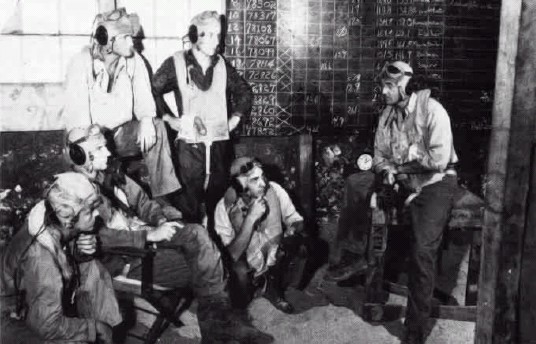
Becoming a Fighter Pilot Required Months of Training
World War II created an enormous demand for military pilots.
The United States Army Air Forces had to expand a small prewar training system into a massive wartime organization capable of producing pilots for fighters, bombers, transports, reconnaissance aircraft, and other missions.
The National Museum of the United States Air Force records that only 184 pilots graduated from advanced Army Air Corps pilot training in 1937. By the end of World War II, Army Air Forces Training Command schools had graduated about 250,000 pilots.
Early in the war, U.S. Army pilot training generally progressed through primary, basic, and advanced stages. Fighter pilots moved into advanced single-engine training before transitioning to operational aircraft.
Training schedules were shortened as wartime demand increased, but becoming a pilot still required mastering takeoffs, landings, formation flying, navigation, instruments, emergency procedures, aerial gunnery, and increasingly powerful aircraft.
Learning to Fly Was Dangerous Even Before Combat
Military aviation was dangerous by its nature.
Young pilots trained on aircraft that became faster and more demanding as they progressed through the program.
A mistake during a landing, engine failure, loss of orientation in bad weather, mid-air collision, or poorly judged maneuver could kill a pilot who had never seen an enemy aircraft.
Operational units continued training after pilots arrived because flying a front-line fighter was not the same as flying a trainer.
Combat formations had their own procedures, radio discipline, tactics, and aircraft-specific techniques that a new pilot had to learn quickly.
A Fighter Cockpit Was Small, Busy, and Unforgiving
A World War II fighter pilot did not simply point the airplane and pull a trigger.
The cockpit contained flight instruments, engine gauges, radios, fuel controls, oxygen equipment, weapons controls, trim settings, navigation aids, and other systems that had to be monitored while the pilot was also looking outside for threats.

There was no modern computer constantly warning the pilot about every threat.
Much depended on eyesight, radio calls, formation discipline, instruments, and experience.
A pilot who became fixated on one enemy aircraft could fail to notice another fighter approaching from behind.
That is why pilots were repeatedly taught to keep scanning the sky.
Seeing the Enemy First Could Decide the Fight
Popular culture often presents air combat as two pilots who see one another and begin a fair duel.
Real combat was rarely so neat.
Surprise was extremely important.
A pilot who spotted an enemy first could gain altitude, position himself behind the target, attack at high speed, and leave before the opponent fully understood what was happening.
Many pilots were shot down by aircraft they never saw in time.
Good eyesight and constant observation could therefore matter as much as spectacular aerobatic skill.
Altitude Was Energy
Fighter pilots thought constantly about altitude, speed, position, and energy.
An aircraft above its opponent could dive and convert altitude into speed.
A pilot who lost too much speed in a turning fight could become vulnerable.
Different fighters had different strengths.
One might climb better. Another might turn more tightly. Another might dive faster or perform better at high altitude.
Experienced pilots tried to fight in a way that favored their own aircraft rather than copying the enemy's tactics.
Dogfights Were Only Part of the Mission
Not every fighter mission became a dogfight.
In Europe, American fighters increasingly escorted heavy bombers deep into German-controlled territory.
Earlier U.S. bombers often operated beyond effective fighter escort range, leaving formations vulnerable to German interceptors.
The arrival of long-range fighters—especially the P-51 Mustang—changed the situation.
The National Museum of the U.S. Air Force notes that P-51B and P-51C Mustangs began operating in Europe in late 1943, while by March 1944 American Mustangs and P-38 Lightnings could provide long-range protection on major strikes deep into Germany.

The P-51 became famous because it combined long range with strong combat performance.
With external fuel tanks, American fighter groups could accompany bombers far deeper into enemy territory than had previously been practical.
Escort Pilots Had to Protect Bombers Without Becoming Too Defensive
Bomber escort presented a tactical problem.
If fighters stayed too close to the bombers, they might give up the speed and maneuvering room needed to intercept German fighters before they attacked.
By 1944, American fighter tactics became increasingly aggressive.
Escort groups could range ahead of bomber formations, attack German fighters as they formed up, and later strike enemy aircraft on or near their airfields.
The objective was no longer simply to wait for German aircraft to attack the bombers.
It was increasingly to destroy the Luftwaffe wherever it could be found.
Ground Attack Could Be More Dangerous Than Dogfighting
Fighter pilots also attacked trains, trucks, airfields, artillery positions, troops, and other ground targets.
These missions could be extremely dangerous.
Flying low made an aircraft vulnerable to machine guns, rifles, automatic cannon, and anti-aircraft weapons.
At low altitude there was also little room to recover from engine failure, collision, or pilot error.
Fighter pilots who survived combat with enemy aircraft could still be killed while strafing a railway yard or airfield.
Flak Could Kill a Pilot Who Never Saw an Enemy Fighter
Anti-aircraft fire—often called flak by Allied airmen—was one of the major dangers of air operations over enemy territory.
Heavy anti-aircraft guns could fire shells that exploded at altitude, creating lethal fragments around bomber and fighter formations.
Lighter weapons threatened aircraft operating closer to the ground.
A fighter pilot might spend an entire mission without seeing an enemy fighter and still return with holes in the wings, damaged controls, or a leaking cooling system.
A Small Hit Could Destroy the Aircraft
World War II fighters differed greatly in their ability to absorb damage.
The P-47 Thunderbolt, for example, had a large air-cooled radial engine and became famous for durability.
The P-51 Mustang offered excellent range and performance, but its liquid-cooled engine depended on a functioning cooling system.
The National Museum of the U.S. Air Force notes that damage to the P-51's cooling system could force the aircraft down within a short time.
This meant a few bullets in the wrong location could turn a perfectly flyable fighter into an aircraft the pilot would soon have to abandon.
High-Altitude Flight Brought Cold and Oxygen Problems
Fighter escort missions over Europe could take pilots to very high altitudes.
World War II fighters were generally not pressurized in the way modern passenger aircraft are.
Pilots therefore relied on oxygen equipment at altitude.
Cold was also severe.
Temperatures high above Europe could fall far below freezing.
Heated clothing, gloves, oxygen masks, and cockpit equipment helped, but long missions were physically demanding.
An oxygen-system problem could become extremely dangerous because hypoxia could impair judgment before the pilot fully understood what was happening.
Long Missions Were Exhausting
A fighter pilot had to remain alert for hours.
He might take off from England, climb into formation, join a bomber stream, cross enemy territory, monitor fuel, watch for attackers, fight if necessary, escort the bombers away from the target, and then navigate home.
After combat, adrenaline did not solve practical problems.
The pilot still had to know where he was, calculate whether he had enough fuel, assess any damage, find his airfield, and land safely.
Getting home could be as important as winning the fight.
Fuel Was Constantly on a Fighter Pilot's Mind
Range figures printed in aircraft specifications could be misleading in combat.
Fighting consumed fuel quickly.
High power settings, climbing, low-altitude flight, damaged tanks, unexpected weather, diversion to another airfield, or becoming separated from the formation could all change a pilot's calculations.
A fighter with empty tanks was no longer an effective weapon.
Long-range escort therefore required careful fuel management and disciplined use of external drop tanks.
Weather Could Cancel a Mission—or Kill a Pilot
World War II aircraft did not have the navigation systems or weather information available to modern pilots.
Cloud, fog, thunderstorms, icing, strong winds, and poor visibility could turn routine flying into a serious hazard.
A pilot returning from combat might discover that his home airfield was covered in cloud.
Night, bad weather, battle damage, and low fuel could combine into an emergency even after the enemy had disappeared.
Most Fighter Pilots Were Not Famous Aces
Popular histories naturally focus on aces because their victory totals are dramatic.
But the typical fighter pilot was not a legendary ace.
Many completed missions without ever receiving credit for an aerial victory.
Others achieved one or two victories, flew escort or ground-attack missions, and performed their jobs without becoming famous.
A fighter unit depended on all of these pilots—not only the handful with the highest scores.
What Did It Mean to Become an Ace?
In American usage, a pilot credited with five aerial victories was generally recognized as an ace.
Victory-credit systems differed among air forces, however.
Different nations used different methods for shared kills, damaged aircraft, probable victories, and confirmation.
This makes simple comparisons between the scores of pilots from different countries difficult.
A high victory total could reflect skill, but also opportunity, length of combat service, enemy strength, tactical situation, and the rules used to award credit.
Experienced Pilots Were Extremely Valuable
One of the major differences between the United States and Japan later in the Pacific War was the ability to preserve and replace experienced aircrew.
The U.S. Navy rotated experienced pilots into training and other assignments, allowing their combat knowledge to help prepare new aviators.
Japan lost many highly trained carrier pilots in the battles and campaigns from 1942 onward and struggled to replace them with aviators of equal experience.
By the Battle of the Philippine Sea in June 1944, the U.S. Navy had a much deeper system for replacing trained pilots and crews.
The result was not simply “better airplanes.” It was an increasingly large difference in pilot experience, training, radar support, tactics, and operational organization.
Carrier Pilots Faced an Extra Danger: The Carrier Itself
Naval aviators had to master something land-based fighter pilots did not: landing on a moving ship.
An aircraft carrier's flight deck was short, moving with the sea, crowded with aircraft and crew, and surrounded by ocean.
The pilot approached at low speed, followed signals from the landing signal officer, and attempted to catch an arresting wire with a hook attached to the aircraft.
If the hook missed, the pilot might have to apply power immediately and go around—if there was enough deck and aircraft performance remaining.

Carrier landings could be dangerous even without enemy action.
The U.S. Navy's wartime histories record significant operational losses as new carrier air groups gained experience.
In late 1943, for example, dozens of aircraft were lost in operational accidents during Central Pacific carrier operations.
Taking Off Was Only the Beginning
A carrier fighter pilot might launch to defend the fleet against an incoming raid, escort bombers or torpedo aircraft, attack an island airfield, or fly combat air patrol for hours.
He then had to find the carrier again.
The ship might have changed course and moved many miles while the mission was underway.
Radio direction, navigation, fuel discipline, and fleet procedures were essential.
A pilot who could not find his carrier before running out of fuel might be forced to ditch in the ocean.
The Pacific Created Different Flying Problems
In Europe, an emergency landing might sometimes be possible on friendly territory.
Over the Pacific, a pilot could spend hours above open ocean.
Navigation errors were potentially fatal.
If an engine failed, the pilot might have no choice but to ditch and hope rescuers found him.
Heat, tropical weather, violent storms, and vast distances created problems very different from high-altitude escort over Germany.
For more on those campaigns, see ThinkAIWorld's Pacific War articles.
Getting Shot Down Did Not Always Mean Death
A pilot with a damaged aircraft had several possibilities.
If he still had control, he might try to reach friendly territory or an emergency airfield.
Over water, he might ditch.
If the aircraft was no longer controllable, he might bail out by parachute.
Each option carried risks.
A pilot could be injured leaving the cockpit, strike part of the aircraft, land in enemy territory, drown, suffer exposure, or be captured.
Rescue organizations saved many downed Allied aviators, but rescue was never guaranteed.
Parachuting Over Enemy Territory Created a New Problem
Surviving the destruction of the aircraft could simply begin another ordeal.
A pilot landing behind enemy lines might attempt to evade capture with help from civilians and resistance networks.
Others became prisoners of war.
In the Pacific, capture could be especially dangerous because of the brutal treatment of many Allied prisoners by Japanese forces.
Fighter pilots therefore knew that losing the aircraft could have consequences far beyond the crash itself.
Radio Discipline Was Part of Survival
Fighter formations relied on radio communication to warn of enemy aircraft, coordinate attacks, identify positions, and reorganize after combat.
But too much radio chatter could make communication useless.
Pilots had to transmit information quickly and clearly.
A warning such as an enemy aircraft approaching from behind could mean the difference between survival and being shot down.
Wingmen Were More Important Than Individual Glory
The image of the lone ace can hide how important teamwork was.
Fighter pilots normally operated in formations.
The wingman's job included helping protect his leader from attack while the formation maneuvered against the enemy.
A pilot who chased victories without watching his formation could leave himself or other pilots exposed.
Experienced fighter organizations therefore emphasized mutual support.
A pilot survived partly because another pilot was watching the part of the sky he could not see.
Combat Could Last Seconds After Hours of Flying
This was one of the strangest features of fighter warfare.
A mission might last several hours.
The actual firing opportunity could last only a few seconds.
At closing speeds of hundreds of miles per hour, a pilot had very little time to identify a target, maneuver, judge range and deflection, fire, avoid collision, and then check for other enemies.
A mistake made in one second could cancel years of training.
Shooting Down an Aircraft Was Harder Than It Looks
World War II fighter guns were not automatically locked onto targets.
A pilot had to judge where the enemy aircraft would be when the bullets arrived.
This meant allowing for speed, direction, range, angle, and movement of both aircraft.
Gunsights improved during the war, but the pilot still needed skill and practice.
The P-51D's later K-14 gunsight, for example, was designed to improve the pilot's ability to calculate the necessary lead against a maneuvering target.
The Enemy Was Usually More Than a Machine
Fighter pilots often described air combat in technical language: angles, altitude, speed, range, ammunition, and aircraft type.
But every opposing aircraft normally contained another human being trying to survive.
Some pilots concentrated on the aircraft as a target because thinking too much about the person inside could make combat psychologically harder.
Others remembered individual encounters for the rest of their lives.
Victory could bring excitement and relief, while the death of friends could make the same pilot feel very differently only hours later.
Combat Stress Affected Pilots Too
Aircrew could return to a relatively normal airfield after a mission, eat, sleep, and then be asked to fly back into danger the next day.
This repeated transition between ordinary life and extreme danger created its own form of psychological strain.
Pilots worried about enemy fighters, flak, bad weather, mechanical failure, missing friends, and whether their own luck would eventually run out.
The outward confidence associated with fighter pilots did not mean they were immune to fear.
Experience Often Made Pilots Safer—but Could Also Create Overconfidence
A new pilot had less experience recognizing threats, managing fuel, judging combat situations, and knowing when to disengage.
Veterans often had better instincts because they had survived mistakes and seen what happened to others.
But experience could create another danger.
A successful pilot might become too aggressive, take unnecessary risks, or begin believing that skill would always overcome bad odds.
War did not guarantee that the most experienced pilot would survive the next mission.
The Aircraft Alone Did Not Decide Who Won
Arguments about the “best fighter of World War II” often focus on top speed, climb rate, armament, or turning performance.
Those specifications mattered, but air combat depended on much more.
Pilot training, fuel quality, maintenance, radar, intelligence, formation tactics, numbers, replacement systems, spare parts, airfield conditions, leadership, and mission type could all change the result.
A technically excellent fighter with a poorly trained pilot and insufficient fuel could be less effective than an older aircraft flown by a veteran inside a well-organized air-defense system.
Why the P-51 Became So Famous
The Mustang was not unbeatable, but it solved an extremely important Allied problem in Europe: escort range.
The P-51 could accompany heavy bombers deep into Germany while still possessing enough speed and maneuverability to fight Luftwaffe interceptors effectively.
Its long range allowed American fighters to pressure German aviation across a much larger area.
By 1944, U.S. fighters were increasingly hunting German aircraft rather than merely waiting beside bomber formations.
This helped wear down the Luftwaffe's experienced pilot force at a time when Germany was struggling to replace losses.
Why the F6F Hellcat Became So Important in the Pacific
The F6F Hellcat combined strong performance, rugged construction, carrier suitability, and a powerful radial engine.
It entered combat as American naval aviation was expanding rapidly.
By 1944, Hellcat units benefited not only from the aircraft itself but from better training, radar-directed fighter control, larger carrier forces, improved tactics, and an increasingly experienced U.S. naval aviation system.
The Battle of the Philippine Sea showed how devastating that combination could become against a Japanese carrier air arm that had lost many of its prewar veterans.
Frequently Asked Questions
Was being a fighter pilot safer than being a bomber crewman?
Risk varied enormously by theater, time period, mission, and aircraft. Heavy bomber crews over Europe faced extremely high losses during some periods, while fighter pilots faced their own dangers from aerial combat, flak, ground attack, weather, accidents, and mechanical failure. There is no single answer that applies to the entire war.
How did pilots become fighter aces?
In U.S. practice, five credited aerial victories generally qualified a pilot as an ace. Other air forces used different systems for awarding and confirming victories.
Did fighter pilots always fight other aircraft?
No. Fighter pilots flew bomber escort, combat air patrol, interception, reconnaissance, ground attack, anti-shipping, and other missions. Many sorties ended without an aerial engagement.
Why did fighter pilots need oxygen?
At high altitude, the amount of usable oxygen available to the body becomes insufficient. World War II fighters were generally not pressurized, so pilots relied on oxygen systems during high-altitude operations.
What was more dangerous: dogfighting or ground attack?
Both could be lethal. Low-level ground attack exposed pilots to concentrated small-arms and anti-aircraft fire while leaving little altitude for recovery from damage or mistakes.
Why were aircraft carriers difficult for pilots?
Carrier pilots had to take off and land on a short moving flight deck. A landing required accurate speed, alignment, and timing while the ship itself moved through the sea.
Did the best aircraft always win?
No. Aircraft performance mattered, but so did pilot skill, numbers, tactics, maintenance, intelligence, fuel, radar, leadership, and operational conditions.
Conclusion
Being a fighter pilot in World War II was not a continuous series of glamorous dogfights.
It was a demanding job built around preparation, navigation, formation discipline, fuel calculations, mechanical knowledge, observation, teamwork, and the ability to make decisions under extraordinary pressure.
The actual shooting might last only seconds.
The mission could last hours.
In Europe, pilots flew through freezing high-altitude conditions, escorted bombers over Germany, faced Luftwaffe fighters and flak, and increasingly attacked enemy aircraft on the ground.
In the Pacific, naval aviators operated across enormous stretches of ocean and then had to land back on moving carriers. Land-based pilots faced tropical weather, long over-water flights, and campaigns spread across distant islands.
The famous aces were real, but they represented only one part of military aviation.
Thousands of other pilots flew escort, patrol, interception, ground-attack, and support missions without becoming household names.
The most important lesson is that fighter warfare was never simply pilot versus pilot or aircraft versus aircraft.
It was a contest between entire military systems: training schools, mechanics, fuel supplies, radar networks, airfields, intelligence organizations, aircraft factories, tactics, and the pilots who brought all of those resources into combat.
For more aircraft-focused stories, explore ThinkAIWorld's Aircraft history section.
Sources
National Museum of the U.S. Air Force — Flight Training on the Eve of WWII
National Museum of the U.S. Air Force — AAF Training During WWII
National Museum of the U.S. Air Force — North American P-51D Mustang
U.S. Naval History and Heritage Command — Aircraft Carriers
U.S. Naval History and Heritage Command — The Great Marianas Turkey Shoot
