
By April 1945, Nazi Germany was collapsing. American and British armies had crossed the Rhine and were advancing rapidly across Germany, while the Soviet Red Army was approaching Berlin from the east.
At first glance, the obvious question seems to be: why didn't General Dwight D. Eisenhower simply order the Western Allies to race for Berlin and capture Hitler's capital before the Soviets?
American troops were already approaching the Elbe River, and some units were only around 60 miles from Berlin. Yet Eisenhower deliberately chose not to make Berlin the main objective.
The decision was controversial then and remains debated today. But it was not simply a case of “giving Berlin away.” Eisenhower was making a military decision based on casualties, logistics, Allied agreements, German resistance, and the rapidly changing battlefield.
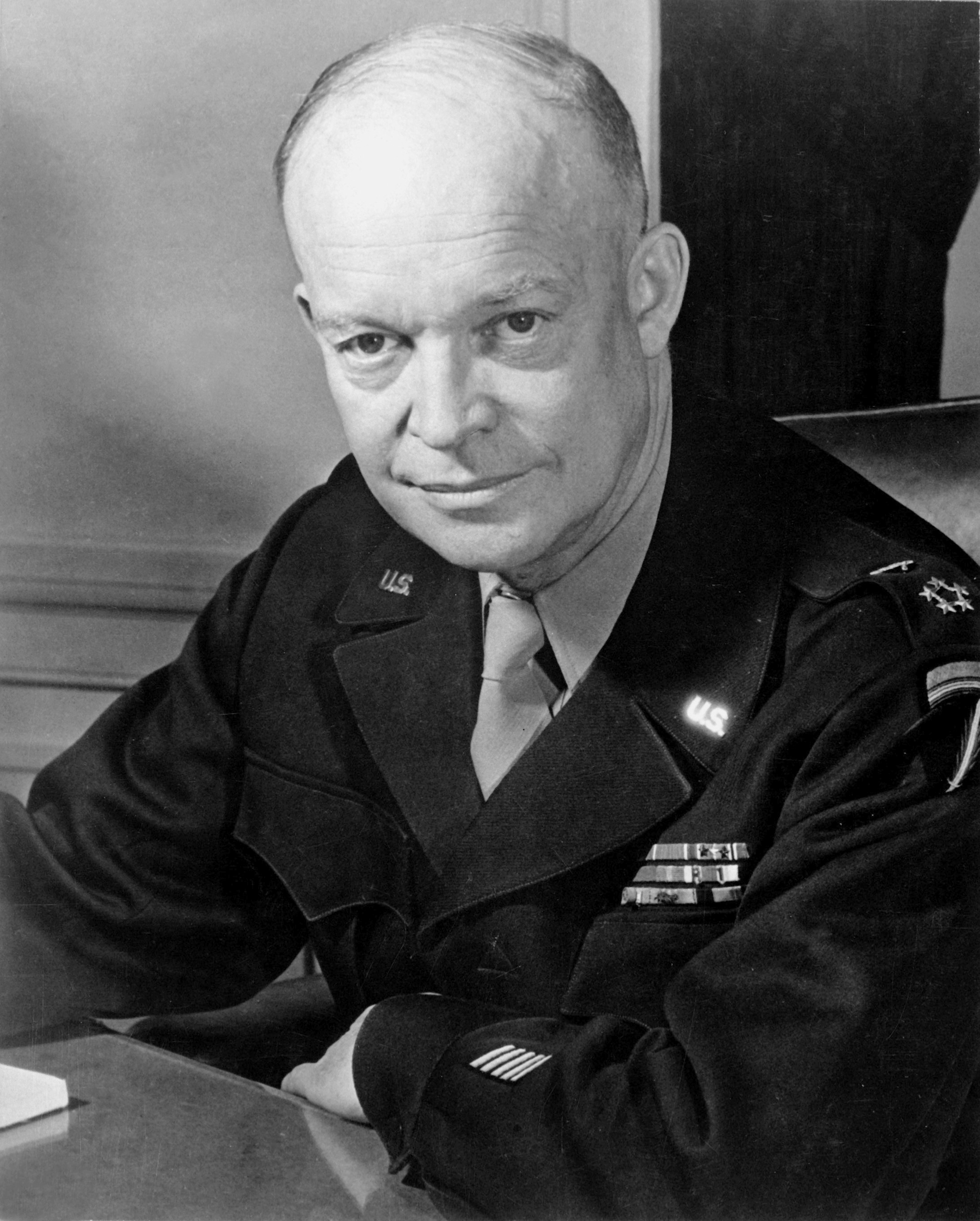
Who Was Dwight D. Eisenhower?
Dwight D. Eisenhower was the Supreme Commander of the Allied Expeditionary Force in Western Europe.
His job was much larger than commanding one American army. He had to coordinate forces from the United States, Britain, Canada, France, and other Allied nations while managing difficult relationships between senior commanders such as Bernard Montgomery, Omar Bradley, and George S. Patton.
Eisenhower had already overseen the Allied invasion of Normandy in June 1944 and the long campaign that followed across France, Belgium, the Netherlands, and into Germany.
By spring 1945, his central mission was clear: destroy the remaining German military forces and force Nazi Germany to surrender.
Berlin Was Politically Important—but Was It Militarily Necessary?
Berlin was Hitler's capital and the symbolic center of Nazi Germany.
Capturing it would obviously have enormous political and psychological importance.
But Eisenhower did not believe that taking Berlin was necessary to defeat Germany militarily.
By April 1945, the German armed forces were already collapsing across several fronts. Large German formations had been destroyed or surrounded, Allied armies had crossed the Rhine, and German command structures were beginning to break apart.
Eisenhower therefore focused on destroying remaining German forces rather than capturing a symbolic city at any cost.
The Ruhr Was a Higher Military Priority
Before any serious race toward Berlin could happen, Eisenhower wanted to eliminate the Ruhr.
The Ruhr was Germany's most important industrial region and contained large numbers of German troops.
American forces surrounded the Ruhr in early April 1945, creating a huge pocket.
More than 300,000 German soldiers eventually surrendered there.
For Eisenhower, destroying this force mattered more than sending large formations directly toward Berlin while leaving powerful German units behind.
American Troops Reached the Elbe
After the Ruhr collapsed, U.S. forces advanced rapidly eastward.
On 12 April 1945, elements of the U.S. Ninth Army reached and crossed the Elbe River near Magdeburg.
Berlin was now surprisingly close.
Some commanders believed an armored dash toward the German capital might still be possible.

Lieutenant General William Simpson, commander of the Ninth Army, was particularly interested in continuing toward Berlin.
His troops had advanced quickly and German resistance in some areas appeared weak.
But Eisenhower ordered the advance to stop at the Elbe rather than turning Berlin into the main Western Allied objective.
How Many Casualties Could Berlin Cost?
One of the biggest considerations was the expected cost.
Berlin was a huge city with millions of inhabitants, reinforced by German soldiers, SS units, police, Volkssturm militia, and other defenders.
Urban warfare could become extremely destructive.
General Omar Bradley reportedly estimated that capturing Berlin might cost the Western Allies around 100,000 casualties.
The exact number was obviously impossible to know in advance, but the later Soviet battle for Berlin demonstrated how costly the fighting could become.
Eisenhower had to ask a simple military question: was Berlin worth sacrificing tens of thousands of Allied soldiers when the city would not determine whether Germany ultimately surrendered?
The Soviets Were Already Preparing a Massive Attack
The Red Army was not waiting passively for the Western Allies.
Joseph Stalin and the Soviet high command had assembled enormous forces for the final attack on Berlin.
The Soviet offensive began in mid-April 1945.
Huge Red Army formations attacked German positions along the Oder River and advanced toward the capital from several directions.
This meant that any Western Allied race toward Berlin would not simply involve fighting Germans.
It would also require close coordination with Soviet armies converging on the same city.
The Occupation Zones Had Already Been Agreed
This is one of the most important facts in the entire debate.
Before the final battle for Germany, the Allied powers had already agreed broadly on how defeated Germany would be divided into occupation zones.
Berlin itself was located deep inside the area assigned for Soviet occupation, although the city would later be divided into Soviet, American, British, and French sectors.
That meant even if American or British forces captured Berlin first, they would eventually have to withdraw from surrounding territory according to the occupation arrangements.
So Eisenhower saw limited military value in sacrificing large numbers of troops to capture ground that would later be transferred to Soviet control.
Churchill Wanted a More Aggressive Advance East
British Prime Minister Winston Churchill viewed the situation differently.
Churchill was increasingly concerned about Soviet power in post-war Europe.
He wanted Western Allied armies to advance as far east as practical before the war ended.
From Churchill's perspective, occupying more German territory could strengthen the Western position during negotiations with Stalin.
Eisenhower, however, was the military commander, not the political leader responsible for negotiating Europe's post-war borders.
His priority remained the destruction of German military resistance with the lowest reasonable cost to Allied troops.
Eisenhower Was Also Worried About Southern Germany
Another concern involved reports of a possible German defensive concentration in southern Germany and Austria.
Allied intelligence feared that senior Nazis and German forces might attempt to establish a so-called “National Redoubt” in the Alpine region.
The threat turned out to be exaggerated.
But at the time, Eisenhower could not know exactly how serious it was.
He therefore directed major forces toward central and southern Germany rather than placing everything into a drive on Berlin.
Was the “Alpine Redoubt” a German Bluff?
In large part, yes.
Nazi propaganda and scattered intelligence reports helped create the impression that Germany might have prepared a fortified mountain region where fanatical forces could continue fighting for months.
After Allied forces entered the region, they discovered that no such powerful organized fortress existed.
But military commanders have to make decisions using the information available at the time—not what historians discover afterward.
Eisenhower Wanted to Prevent German Forces From Escaping South
Even without a true Alpine fortress, southern Germany remained strategically important.
German forces from other fronts might attempt to withdraw toward Bavaria, Austria, or Czechoslovakia.
Eisenhower wanted to cut Germany apart and prevent large formations from regrouping.
His armies therefore advanced toward Leipzig, Dresden-area approaches, southern Germany, Austria, and Czechoslovakia while also linking up with Soviet forces.
The Americans and Soviets Meet at the Elbe
On 25 April 1945, American and Soviet troops met near Torgau on the Elbe River.
The meeting symbolized the effective division of Nazi Germany into separate eastern and western battle areas.

By then, the Soviet armies were already fighting their way into Berlin.
Hitler remained inside the Führerbunker while the city's defenses collapsed around him.
Could the Americans Have Captured Berlin First?
This is impossible to answer with certainty.
American troops had advanced rapidly toward the Elbe, and some senior officers believed a push toward Berlin might succeed.
But distance alone does not tell the whole story.
A force racing toward Berlin would need fuel, ammunition, bridges, air support, infantry, engineers, artillery, and protection for long supply lines.
German resistance could also stiffen around the capital.
At the same time, Soviet forces were attacking Berlin with overwhelming strength from the east.
So it is reasonable to say the Western Allies potentially could have attempted a race for Berlin—but success was not guaranteed, and the price could have been high.
Did Eisenhower “Give Berlin to Stalin”?
That phrase oversimplifies the situation.
Berlin's post-war occupation arrangements had already been negotiated by the Allied governments.
Eisenhower did not personally decide the political future of Berlin.
His decision concerned where his armies should fight during the final weeks of the war.
He concluded that capturing Berlin was not worth the military cost when Germany could be defeated by destroying its armies elsewhere.
Was Eisenhower Wrong?
Historians still debate the broader political consequences.
Some argue that a stronger Western advance toward Berlin or Prague might have improved the Western Allies' position against the Soviet Union after the war.
Others point out that occupation zones had already been agreed and that troops might have died capturing territory they would later leave.
From Eisenhower's perspective, the question was fundamentally military.
His task was not to begin planning the Cold War before World War II had even ended.
His task was to defeat Nazi Germany.
The Battle of Berlin Was Extremely Costly
The Soviet attack on Berlin demonstrated just how difficult the battle could be.
The Red Army fought through heavily defended approaches, rivers, fortified positions, suburbs, and finally the dense urban center.
The battle resulted in enormous Soviet, German, and civilian casualties.
By 25 April, Berlin was completely surrounded.
Hitler died by suicide on 30 April.
The German garrison surrendered on 2 May 1945.
Only days later, Germany surrendered unconditionally.
Eisenhower's Decision Did Not Delay Germany's Defeat
This is another important point.
The Western Allies did not need Berlin to force German surrender.
German military power was collapsing throughout the country.
Large forces were surrendering in the west, northern Germany, Italy, Austria, and elsewhere.
On 7 May 1945, General Alfred Jodl signed Germany's unconditional surrender at Eisenhower's headquarters in Reims, France.
Military operations in Europe ended shortly afterward.
What Does the Decision Tell Us About Eisenhower?
The Berlin decision illustrates Eisenhower's command style.
He was not usually interested in symbolic victories simply for prestige.
His strength as Supreme Commander was coalition warfare: balancing competing generals, national interests, logistics, and battlefield priorities while keeping the Allied war effort moving toward a common objective.
He preferred military objectives that directly contributed to destroying enemy forces.
Berlin was politically dramatic, but Eisenhower believed other objectives offered greater military value.
Frequently Asked Questions
How close did American troops get to Berlin?
U.S. forces reached the Elbe near Magdeburg in April 1945, roughly 60 miles from Berlin in some sectors.
Did Eisenhower order the Americans to stop?
Yes. Eisenhower decided that Berlin would not become the main Western Allied objective and directed forces toward other military targets.
Did Churchill want Berlin captured by the Western Allies?
Churchill wanted Western armies to advance farther east because he was increasingly concerned about Soviet influence in post-war Europe.
Was Berlin already assigned to the Soviet Union?
Berlin lay inside the Soviet occupation zone, although the city itself was later divided into Soviet, American, British, and French sectors.
Did the Soviets suffer heavy losses taking Berlin?
Yes. The final Soviet offensive and battle for Berlin were extremely costly, reinforcing Eisenhower's concern that capturing the city could require major casualties.
Conclusion
Dwight D. Eisenhower did not order a race for Berlin because he did not believe capturing the German capital was necessary to win the war.
By April 1945, Germany's armies were collapsing, the Ruhr had been destroyed as a major fighting force, Soviet armies were already converging on Berlin, and the city's post-war occupation arrangements had largely been settled.
Eisenhower also expected that a battle for Berlin could cost tens of thousands of Allied casualties.
Rather than sacrificing troops for a symbolic prize, he concentrated on destroying German military forces, preventing organized resistance elsewhere, and linking up with the Soviet armies.
Whether a Western capture of Berlin would have changed the early Cold War remains a matter of historical debate.
But Eisenhower's own reasoning was primarily military: defeat Nazi Germany as efficiently as possible, rather than fight a costly battle for a city the Western Allies did not need in order to win.
Sources: U.S. Army Center of Military History, Command Decisions; U.S. Army Center of Military History, The Last Offensive; Dwight D. Eisenhower, Report by the Supreme Commander to the Combined Chiefs of Staff.
