
Before dawn on 22 June 1941, more than three million German troops began one of the largest military invasions in history. Adolf Hitler's forces crossed into the Soviet Union across an enormous front stretching from the Baltic region toward the Black Sea.
The attack became known as Operation Barbarossa.
What makes the opening of the campaign remarkable is that Joseph Stalin had not been left completely in the dark. Soviet intelligence officers, foreign governments, diplomats, spies, and military observers had repeatedly warned Moscow that Germany was preparing to attack.
Yet when the invasion came, the Soviet Union still suffered enormous tactical surprise.
Why?
The answer is more complicated than simply saying Stalin trusted Hitler. Stalin received large amounts of intelligence—some accurate, some contradictory, and some deliberately misleading. He distrusted Britain, feared provoking Germany, believed Hitler would hesitate to fight Britain and the Soviet Union at the same time, and desperately wanted more time to strengthen the Red Army.
Those assumptions contributed to one of the most serious intelligence failures of World War II.

Stalin Knew Nazi Germany Was a Long-Term Threat
Stalin was not unaware that Nazi Germany represented a serious danger to the Soviet Union.
Hitler's hostility toward communism and the Soviet state had been public for years. Nazi ideology called for German expansion into Eastern Europe and the destruction of what Hitler described as “Judeo-Bolshevism.”
The German-Soviet Non-Aggression Pact of August 1939 therefore did not transform the two dictatorships into genuine ideological allies.
For Stalin, the agreement bought time.
It also allowed the Soviet Union to avoid immediate involvement in Germany's war against Britain and France while the Red Army expanded and reorganized.
Hitler viewed the arrangement as temporary. After France was defeated in 1940, he decided Germany would invade the Soviet Union the following year. On 18 December 1940, he signed Directive No. 21, the operational order for Operation Barbarossa.
Why Did Stalin Think He Still Had Time?
One of Stalin's most important assumptions was that Hitler would be reluctant to fight a major war on two fronts.
Britain was still fighting Germany.
From Stalin's perspective, attacking the Soviet Union before defeating or reaching an agreement with Britain appeared extremely dangerous. Germany had already experienced the problems of a two-front war during World War I.
Stalin therefore expected Hitler to deal with Britain first.
This assumption shaped the way he interpreted many of the warnings arriving in Moscow.
Evidence of an approaching invasion could be explained as German diplomatic pressure, military intimidation, British misinformation, or preparations intended to conceal some other operation.
The German Military Buildup Was Increasingly Obvious
During 1940 and especially the first half of 1941, Germany transferred huge numbers of troops toward Soviet territory.
German formations appeared throughout occupied Poland and other eastern regions. Rail traffic increased, and military headquarters, supply depots, airfields, and other infrastructure expanded.
The Soviet intelligence services were reporting these developments.
Foreign governments were also warning Moscow.
The problem was therefore not simply a lack of information.
The problem was how Stalin interpreted the information he received.
The Warnings Were Not Always Consistent
Looking backward, 22 June 1941 can seem obvious.
For intelligence officers working before the event, the situation was more confusing.
Different reports suggested different invasion dates. Some dates passed without an attack. Rumors circulated throughout Europe, and Germany deliberately attempted to conceal its intentions.
Each inaccurate prediction could make later warnings appear less reliable.
Stalin could therefore use uncertainty in the intelligence to reinforce what he already believed: that Hitler was applying pressure but was not yet ready to begin a full-scale war.
Stalin Distrusted British Warnings
Britain had a clear strategic interest in seeing Germany fight the Soviet Union.
Stalin understood this.
If Germany invaded the Soviet Union, Britain would gain a powerful new enemy for Hitler and German military resources would be divided between east and west.
When British officials warned Moscow about German preparations, Stalin suspected that London might be trying to provoke a German-Soviet conflict.
That suspicion made even accurate British intelligence easier for him to dismiss.
Soviet Intelligence Was Warning Moscow Too
The warnings did not only come from Britain.
Soviet intelligence networks in Europe and Asia were also reporting evidence of German preparations.
Richard Sorge, the famous Soviet intelligence officer operating in Tokyo, became one of the best-known sources associated with warnings about Germany.
Other Soviet agents reported troop movements, diplomatic information, and evidence of an approaching attack.
Popular accounts sometimes reduce this story to a single perfect warning that Stalin simply threw away.
The reality was more complicated. Moscow received many reports of varying reliability, sometimes containing conflicting dates.
But by the spring and early summer of 1941, the overall pattern increasingly pointed toward invasion.
Stalin's Dictatorship Made Intelligence Analysis Harder
Stalin's political system created another major problem.
Officials understood that telling the dictator something he did not want to hear could be dangerous.
The purges of the late 1930s had affected the Red Army, intelligence agencies, and other Soviet institutions.
Officers could be accused of spreading panic, providing false information, or displaying disloyalty.
This created an unhealthy environment for intelligence analysis.
Good intelligence requires analysts to challenge assumptions. Stalin's system encouraged officials to worry about whether their conclusions matched the expectations of the political leadership.
Stalin Was Desperate Not to “Provoke” Hitler
Stalin's main objective during the spring of 1941 was to postpone war.
He believed that every additional month could make the Soviet Union stronger.
Military commanders near the western frontier were therefore warned against actions that might provide Germany with a supposed excuse for attack.
German reconnaissance aircraft entered Soviet airspace, yet Moscow often responded cautiously.
Measures that could appear too aggressive were treated with suspicion.
Stalin wanted the Red Army to prepare while avoiding anything that might accelerate the outbreak of war.
The TASS Statement Only Days Before the Attack
The Soviet effort to reduce tensions continued almost until the invasion began.
On 14 June 1941, the Soviet news agency TASS issued a statement rejecting reports that Germany intended to attack the Soviet Union and maintaining that both countries were observing their non-aggression agreement.
Eight days later, Germany invaded.
The statement demonstrated how strongly Soviet policy was still focused on avoiding escalation even when military danger had become severe.
Was Stalin Doing Nothing to Prepare?
No.
That would be another oversimplification.
The Soviet Union was moving troops, calling up reserves, constructing defenses, and shifting military formations westward.
Stalin clearly understood that war with Germany might eventually happen.
The critical mistake concerned timing.
He wanted military preparations to continue without taking steps he feared could trigger an immediate German attack.
The result was extremely dangerous: major Soviet forces were close enough to the frontier to be exposed to Germany's opening offensive but were not uniformly ready to meet it.
The Red Army Had Other Serious Weaknesses
Stalin's intelligence decisions were only one part of the catastrophe.
The Red Army had expanded enormously during the years before Operation Barbarossa.
Many formations lacked experienced officers, reliable communications, transportation, maintenance capacity, and sufficient training.
The earlier purges had disrupted the officer corps.
Modern tanks and aircraft were entering service, but crews were still learning new equipment while large quantities of older weapons remained in use.
Command structures were also undergoing major changes.
The Soviet Union possessed enormous military resources, but those resources were not uniformly organized or ready for the attack that came in June 1941.
The Final Alert Came Too Late
By 21 June, the evidence of an imminent German attack had become extremely difficult to dismiss.
Late that night, Soviet authorities finally sent an alert directive to the western military districts.
Units were told to move toward greater combat readiness.
But commanders were still cautioned against responding to German “provocations” without authorization.
For an army spread across an enormous frontier, the directive came too late to completely change readiness before the attack began.
Operation Barbarossa Begins
In the early hours of 22 June 1941, German forces attacked the Soviet Union.

German aircraft attacked Soviet airfields, headquarters, transportation networks, and troop concentrations.
Three major German army groups advanced along different axes across the enormous front.
The invasion achieved major tactical surprise.
Large numbers of Soviet aircraft were destroyed during the opening phase of the campaign, while communications broke down in many areas.
German armored formations rapidly penetrated Soviet defensive positions and advanced into the rear.
The Consequences Were Catastrophic
During the following weeks and months, German armored formations repeatedly moved around Soviet armies and created enormous encirclements.
Major Soviet formations were trapped during battles around Bialystok-Minsk, Smolensk, Kiev, Vyazma, and Bryansk.
Hundreds of thousands of Soviet soldiers were captured, killed, wounded, or separated from their units.
German forces advanced hundreds of kilometers into Soviet territory.
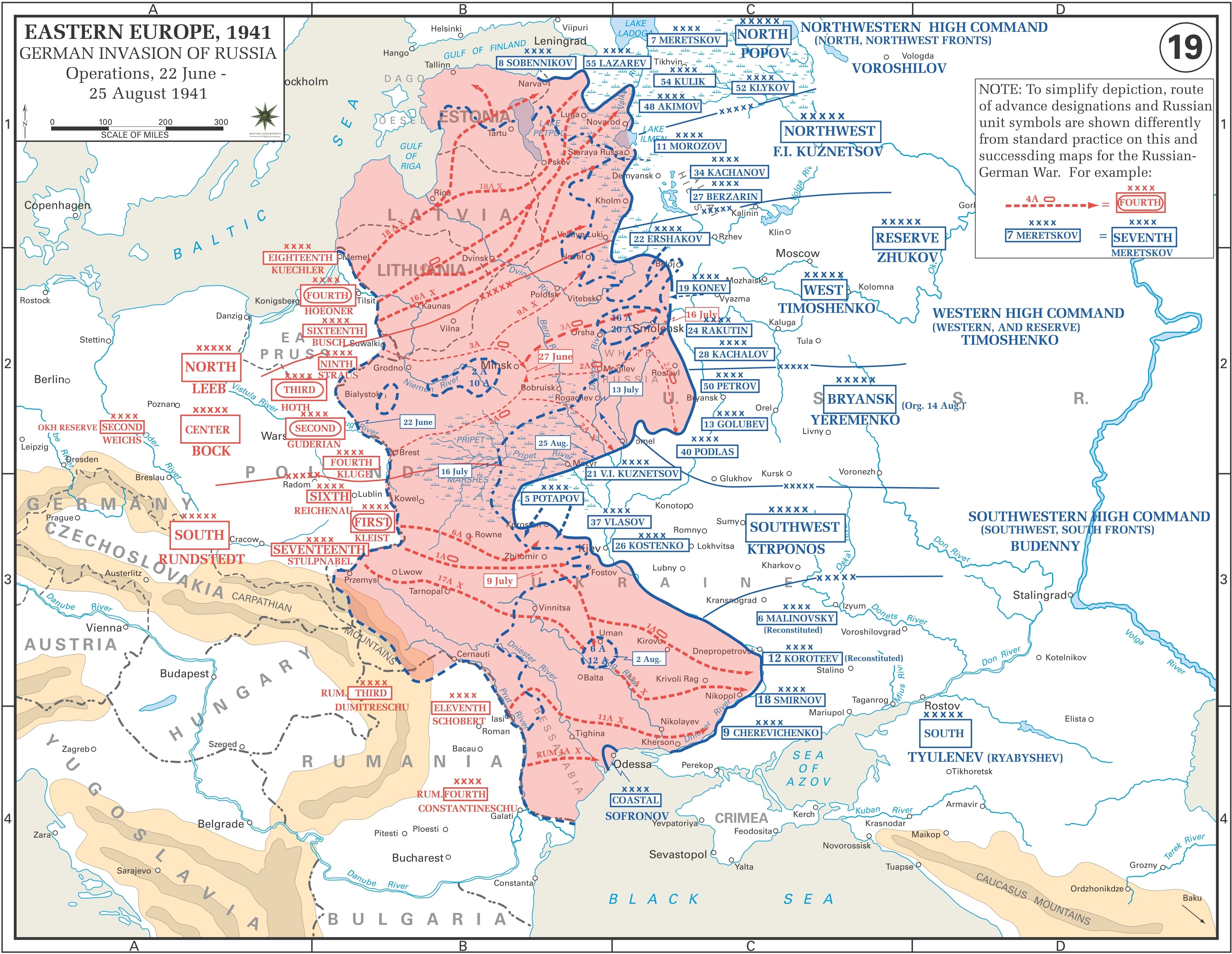
By the end of 1941, German forces had reached the approaches to Moscow.
The Soviet Union survived, but only after suffering enormous human and material losses.
Why Didn't Stalin Believe Hitler?
Stalin did not actually believe Hitler was trustworthy.
Instead, he believed Hitler would behave according to Stalin's understanding of German strategic interests.
He expected Germany to avoid a major two-front war.
He expected German troop concentrations to be used as political pressure before an actual invasion.
And he believed Germany's conflict with Britain would have to be resolved first.
Most importantly, Stalin believed the Soviet Union still had more time.
Those assumptions proved disastrously wrong.
German Deception Reinforced Stalin's Mistake
Germany also attempted to conceal its plans.
German explanations portrayed some eastern troop movements as temporary deployments or preparations connected with the continuing conflict against Britain.
Operational secrecy surrounded the preparations for Barbarossa.
This deception was effective partly because it reinforced Stalin's existing expectations.
Successful deception often works best when it confirms what an opponent already wants to believe.
Was Stalin Simply Afraid of War?
Stalin's behavior was not based on pacifism.
He was trying to control the timing of the conflict.
The Soviet leadership knew the military was still reorganizing and modernizing.
A war later appeared preferable to a war immediately.
Stalin therefore tried to maintain economic relations with Germany, avoid military incidents, and postpone confrontation.
The strategy only worked if Hitler could actually be delayed.
He could not.
Was Operation Barbarossa Really a Complete Surprise?
The answer depends on what “surprise” means.
Soviet leaders knew that war with Germany was possible.
The Red Army was not completely unaware that Germany represented a threat.
But the Soviet leadership failed to accept that the invasion was about to begin at the moment it actually did.
Germany therefore achieved tactical and operational surprise even though the general possibility of a German-Soviet war had been obvious for months.
Stalin did not wake on 22 June unaware that Germany and the Soviet Union might eventually fight.
He woke having catastrophically misjudged when Hitler would begin that war.
Did Stalin Learn From the Disaster?
The Soviet war effort changed dramatically after the invasion.
The government mobilized manpower and industry on an extraordinary scale.
Factories were evacuated eastward. New armies were formed. Command structures evolved as Soviet officers gained combat experience.
Stalin also became increasingly willing to rely on senior professional commanders as the war continued.
The Soviet Union survived the German advance, stopped the Wehrmacht near Moscow, and eventually pushed westward until Soviet forces reached Berlin in 1945.
But eventual victory did not erase the terrible consequences of the mistakes made before June 1941.
Frequently Asked Questions
Did Stalin know Hitler might invade the Soviet Union?
Yes. Stalin understood that Nazi Germany represented a long-term danger and received many reports of German preparations. His error was rejecting or discounting the conclusion that invasion was imminent in June 1941.
Did Britain warn Stalin?
Yes. Britain warned the Soviet leadership about German preparations, but Stalin distrusted British motives and suspected London wanted to provoke a war between Germany and the Soviet Union.
Did Soviet spies warn Moscow?
Yes. Soviet intelligence networks supplied numerous reports concerning German military preparations, although reports differed in detail and reliability.
Why didn't Stalin immediately mobilize everything?
Stalin feared that a full mobilization could appear provocative and believed delaying the conflict would give the Red Army more time to prepare.
Was the Soviet Union completely unprepared?
No. Preparations were underway, but many formations were not sufficiently ready, organized, or positioned to withstand the surprise German offensive.
Conclusion
Joseph Stalin did not ignore the danger of Nazi Germany because he lacked information.
He discounted many of the strongest warnings because they conflicted with his own strategic assumptions.
He believed Hitler would hesitate to fight Britain and the Soviet Union simultaneously. He distrusted British motives. German deception reinforced his suspicions. Contradictory intelligence allowed accurate warnings to be dismissed alongside inaccurate ones.
Above all, Stalin wanted more time.
He tried to strengthen Soviet defenses without taking actions that he feared might provoke Germany into attacking.
Instead, this caution contributed to the very surprise he was trying to avoid.
When Operation Barbarossa began on 22 June 1941, the Soviet Union faced an invasion that intelligence had warned about repeatedly but that its political leadership had failed to fully accept as imminent.
Germany achieved enormous victories during the opening months—but Hitler ultimately made his own catastrophic strategic mistake.
The Soviet Union did not collapse.
The war Stalin had desperately tried to postpone became the largest and deadliest front of World War II.
Sources: United States Holocaust Memorial Museum; U.S. Army historical studies of Operation Barbarossa; CIA Studies in Intelligence research on Stalin and Barbarossa; Wikimedia Commons historical image archives.
