
Japan began the Pacific War with one of the most dramatic military offensives in modern history.
Within months of the attack on Pearl Harbor, Japanese forces had seized the Philippines, Malaya, Singapore, the Dutch East Indies, Guam, Wake Island, and large parts of Southeast Asia. The Imperial Japanese Navy appeared dominant, and Allied forces were suffering defeat after defeat.
Yet less than four years later, Japan surrendered unconditionally.
So why did Japan lose the Pacific War after such an astonishing start?
The answer was not one battle, one weapon, or one mistake. Japan lost because its early victories created an empire it could not adequately defend, while the United States and its Allies recovered, learned, mobilized overwhelming industrial power, broke Japanese codes, destroyed Japan's merchant shipping, captured bases closer and closer to the Home Islands, and gradually eliminated Japan's ability to fight a modern industrial war.
By 1945, Japan still had soldiers, aircraft, and the will to resist—but its strategic position had become catastrophic.
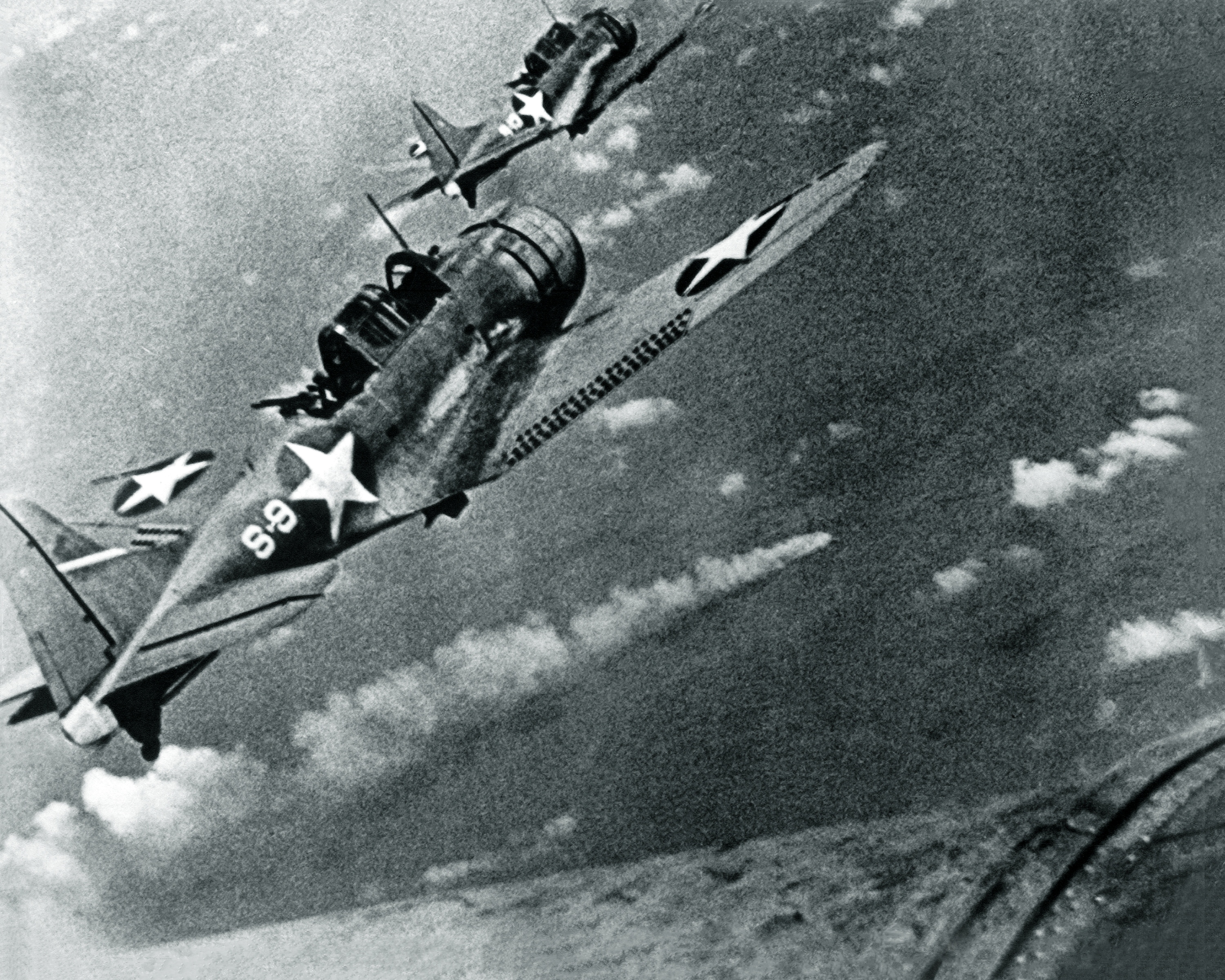
Japan's Strategy depended on a Short War
Japanese leaders understood that the United States possessed a much larger industrial economy than Japan.
Their strategy therefore did not depend on defeating the United States in a long war of production.
Instead, Japan hoped to win quickly.
The plan was to destroy or temporarily cripple major Allied forces in the western Pacific, seize the oil and raw materials of Southeast Asia, create a huge defensive perimeter, and make any Allied attempt to reverse those gains so costly that the United States might negotiate.
This was the strategic logic behind Pearl Harbor and Japan's simultaneous offensives across the Pacific and Southeast Asia.
For a detailed look at the opening blow, see ThinkAIWorld's Pearl Harbor Attack articles.
The Opening Japanese Offensive Was Extremely Successful
From December 1941 into early 1942, Japanese forces moved with extraordinary speed.
British forces surrendered Singapore.
American and Filipino troops were forced back onto Bataan and Corregidor.
The Netherlands East Indies fell, giving Japan access to important oil-producing regions.
Japanese forces also established positions across a vast ocean area extending from the central Pacific to New Guinea and Southeast Asia.
Japan had achieved much of what its planners wanted during the opening phase.
But victory created a new problem.
Japan's New Empire Was Enormous
The territory Japan captured was spread across thousands of miles of ocean.
Every island base, army garrison, airfield, and naval installation needed food, ammunition, fuel, replacement troops, spare parts, and shipping.
Japan had to protect sea routes connecting the Home Islands to the raw materials of Southeast Asia while also supplying forces scattered across the Pacific.
This created an enormous logistical burden.
Japan had expanded faster than its ability to protect everything it had seized.
Japan Could Not Match American Industrial Production
The United States entered the war with a huge industrial base.
American factories produced aircraft, ships, trucks, landing craft, ammunition, radar equipment, engines, and other military supplies on a scale Japan could not match.
The difference became larger as the war continued.
Japan could replace losses, but not at the rate required by a long conflict against the United States and the wider Allied coalition.
The most serious problem was not only the number of machines produced.
Experienced pilots, mechanics, naval crews, and officers were also difficult to replace.
Coral Sea Stopped the First Major Japanese Advance
In May 1942, Japanese forces attempted to seize Port Moresby in New Guinea.
The Battle of the Coral Sea became the first major carrier battle in which the opposing surface fleets never directly saw each other.
Both sides suffered losses.
The United States lost the carrier USS Lexington, while Japan lost the light carrier Shoho and had two fleet carriers unavailable for the coming Midway operation.
More importantly, Japan abandoned the planned seaborne invasion of Port Moresby.
The U.S. Naval History and Heritage Command describes Coral Sea as the first significant setback to Japan's expansion in the Pacific.
Midway Was a Strategic Disaster for Japan
Only one month later came the Battle of Midway.
Japanese Admiral Isoroku Yamamoto hoped to capture Midway Atoll and lure the remaining American carrier force into a battle where it could be destroyed.
But American codebreakers had obtained crucial intelligence about Japanese intentions.
Admiral Chester Nimitz positioned the carriers Enterprise, Hornet, and the hastily repaired Yorktown to ambush the Japanese force.
On 4 June 1942, American carrier aircraft struck the Japanese carriers.
By the end of the battle, Japan had lost Akagi, Kaga, Soryu, and Hiryu—four fleet carriers that had all participated in the Pearl Harbor attack.
The United States lost Yorktown.
Why Was Midway So Important?
The loss of the carriers was severe, but the loss of trained aircrew was also extremely damaging.
Japan had developed a small corps of highly trained naval aviators before the war.
Training them required time and fuel.
As veteran pilots were killed, Japan struggled to replace their experience at the same quality.
The United States, meanwhile, expanded pilot training and aircraft production on a massive scale.
Midway did not instantly make Japan defenseless, but it disrupted the Japanese offensive strategy and removed four of the navy's most important carriers.
Guadalcanal Forced Japan Into a War of Attrition
In August 1942, U.S. Marines landed on Guadalcanal in the Solomon Islands.
This was the first major Allied offensive against Japan in the Pacific.

For six months, Japanese and Allied forces fought on land, at sea, and in the air around the island.
The campaign became a brutal contest of logistics and attrition.
Japan repeatedly tried to reinforce its troops and retake Henderson Field, the airfield controlled by American forces.
But Allied aircraft and naval forces made large-scale Japanese resupply increasingly difficult.
Japanese troops on Guadalcanal suffered not only from combat but from hunger and disease.
In February 1943, Japan evacuated its surviving forces.
The U.S. Naval History and Heritage Command describes Midway and Guadalcanal together as likely turning points of the Pacific War: after them, Japan increasingly fought on the defensive.
The Allies Did Not Attack Every Japanese Island
One of the key Allied strategies was to bypass some heavily defended Japanese positions.
This is often called island hopping.
The Allies selected islands or areas that offered useful airfields, anchorages, or strategic positions while bypassing other Japanese bases that could be isolated instead of assaulted.
A major example was Rabaul.
Rather than launching a costly direct assault on the powerful Japanese base, Allied forces captured surrounding positions and neutralized it through air and naval operations.
Large Japanese garrisons could then be left stranded far from the main advance.
Nimitz and MacArthur Advanced on Different Axes
The Pacific counteroffensive was not one single line of attack.
Admiral Chester Nimitz led the Central Pacific drive through places such as the Gilberts, Marshalls, Marianas, Iwo Jima, and Okinawa.
General Douglas MacArthur advanced through New Guinea and toward the Philippines.
These two approaches forced Japan to defend a vast area.
Allied naval and air power increasingly allowed operations to leap forward while bypassing strong but strategically isolated Japanese garrisons.
The Capture of the Marianas Changed the War
In 1944, U.S. forces attacked the Mariana Islands, including Saipan, Tinian, and Guam.
The islands were strategically important because they could support the new B-29 Superfortress bomber.
From airfields in the Marianas, B-29s could reach the Japanese Home Islands.
Japan understood the danger and committed major naval forces to stop the invasion.
The Battle of the Philippine Sea Crippled Japanese Carrier Aviation
During the fighting for the Marianas in June 1944, Japanese and American carriers fought the Battle of the Philippine Sea.
By this point, the quality gap between many Japanese and American naval aviators had become enormous.
American fighters, radar-directed defenses, improved tactics, and experienced carrier groups destroyed large numbers of Japanese aircraft.
The battle became known among Americans as the “Great Marianas Turkey Shoot.”
Japan still possessed aircraft carriers afterward, but the experienced carrier aviation force that had made Pearl Harbor possible had largely disappeared.
Leyte Gulf Broke the Imperial Japanese Navy as a Major Force
In October 1944, American forces returned to the Philippines.
Japan responded with a complicated naval plan designed to destroy the invasion fleet.
The resulting Battle of Leyte Gulf involved enormous naval forces across several separate engagements.
Japan lost major warships and failed to stop the American return to the Philippines.
After Leyte Gulf, the Imperial Japanese Navy could no longer challenge American naval power on the same scale.
American Submarines Were Quietly Destroying Japan's Economy
Some of the most strategically important fighting happened far from the famous island battles.
Japan depended heavily on merchant shipping to transport oil, food, raw materials, troops, and military equipment across its empire.
American submarines attacked this shipping relentlessly.
Early in the war, U.S. submarines suffered from serious defects in their Mark 14 torpedoes.
Once those problems were finally corrected, submarine effectiveness increased dramatically.
According to post-war U.S. naval assessments, American submarines accounted for roughly 55 percent of Japan's total merchant shipping losses.
By the later stages of the war, Japan was increasingly cut off from the resources it had gone to war to obtain.
Japan Won Oil Fields but Lost the Ability to Bring the Oil Home
This was one of the great strategic ironies of the Pacific War.
Japan had expanded south partly because it needed oil.
It captured oil-producing territory in the Dutch East Indies.
But oil was useful only if tankers could carry it safely back to Japan and to military bases.
American submarines, aircraft, and mines devastated Japanese shipping.
Fuel shortages increasingly restricted pilot training, naval operations, transportation, and industrial production.
By 1945, some major Japanese warships lacked enough fuel for normal operations.
American Codebreaking Continued to Matter
Intelligence was another major Allied advantage.
American cryptanalysts had played a decisive role before Midway by helping identify Japanese plans.
Communications intelligence also assisted submarine operations and helped Allied commanders understand Japanese movements.
This did not mean every Japanese message was readable or that intelligence eliminated uncertainty.
But when combined with reconnaissance, radar, air patrols, and growing Allied technical capabilities, it gave the United States important advantages in several campaigns.
Japan's Pilot Training System Could Not Replace Its Losses
Before the war, Japanese naval aviators were among the most highly trained pilots in the world.
The problem was that the training system produced a relatively small elite.
When experienced pilots were lost at Midway, Guadalcanal, and later battles, replacement pilots often received less training before being sent into combat.
The United States followed the opposite trajectory.
American pilots accumulated experience while a massive training system continuously produced replacements.
By 1944, many Japanese pilots were facing American opponents with better aircraft, better radar support, stronger maintenance systems, more fuel for training, and far more experienced carrier organizations.
Japan's Defensive Perimeter Kept Shrinking
By 1944 and 1945, the United States had captured positions increasingly close to Japan.
Saipan and Tinian enabled strategic bombing of the Home Islands.
The Philippines threatened Japan's links with Southeast Asian resources.
Iwo Jima offered emergency landing and fighter-support possibilities along the route between the Marianas and Japan.
Okinawa placed major Allied forces only a few hundred miles from the Japanese Home Islands.
Japan could no longer keep the war at the outer edge of its empire.
Kamikaze Attacks Showed How Desperate the Situation Had Become
As Japan's conventional military position deteriorated, organized suicide attacks became a major feature of Japanese defense.
Kamikaze aircraft deliberately crashed into Allied ships.

These attacks inflicted serious casualties and damaged or sank numerous ships.
But they also reflected Japan's shrinking options.
Japan was increasingly unable to contest American air and naval power using conventional methods alone.
Suicide tactics could make every invasion extremely costly, but they could not restore Japan's lost industrial, naval, or logistical position.
Iwo Jima and Okinawa Showed the Likely Cost of Invading Japan
Japanese defenders fought with extraordinary determination on Iwo Jima and Okinawa.
Both battles caused heavy American casualties.
Okinawa also exposed the U.S. fleet to massive kamikaze attacks.
These battles mattered strategically because Allied leaders were already thinking about what an invasion of the Japanese Home Islands might look like.
If isolated islands could produce such intense resistance, invading densely populated Japan could be far worse.
The Blockade Was Strangling Japan
By 1945, Japan's economy was collapsing under the combined effects of submarine warfare, aerial mining, bombing, and the loss of overseas territories.
Food, oil, and industrial materials became increasingly scarce.
The U.S. Naval History and Heritage Command's post-war assessment concluded that Japan had lost most of the merchant shipping available to it during the war.
The navy's ability to operate was severely restricted by fuel shortages.
Japan still retained large numbers of soldiers on the Home Islands and in Asia, but moving and supplying forces had become increasingly difficult.
B-29 Bombing Brought the War Directly to Japanese Cities
From bases in the Marianas, American B-29s launched an expanding strategic bombing campaign against Japan.
Operations eventually shifted toward large-scale incendiary attacks against urban areas.
The firebombing of Tokyo in March 1945 killed enormous numbers of civilians and destroyed large sections of the city.
Other Japanese cities were also heavily bombed.
These raids damaged industrial production and transportation while adding immense civilian suffering to an already collapsing war economy.
Japan Still Did Not Surrender
Despite military defeats, blockade, bombing, and the destruction of much of its navy, Japan's leadership remained divided over surrender.
Some leaders sought a way to end the war while preserving the imperial institution and avoiding occupation.
Others hoped that inflicting terrible casualties during an Allied invasion might produce better negotiating terms.
This meant that military defeat alone did not immediately produce political surrender.
The Potsdam Declaration Demanded Surrender
In July 1945, the United States, Britain, and China issued the Potsdam Declaration.
It called on Japan to surrender and warned of devastating consequences if it refused.
Japan did not immediately accept the declaration.
Meanwhile, events were moving rapidly.
The Atomic Bombings Changed the Situation
On 6 August 1945, the United States dropped an atomic bomb on Hiroshima.
On 9 August, a second atomic bomb was dropped on Nagasaki.
The destruction was unprecedented.
But the atomic bombs were not the only major shock Japan faced during those days.
The Soviet Union Entered the War Against Japan
On 8 August 1945, the Soviet Union declared war on Japan.
Soviet forces then launched a massive offensive against Japanese forces in Manchuria.
This destroyed a major Japanese diplomatic hope.
Japanese leaders had hoped the Soviet Union might help mediate a negotiated end to the war with the Western Allies.
Once the Soviets entered the conflict, that possibility disappeared.
What Finally Caused Japan to Surrender?
Historians continue to debate the relative importance of the atomic bombings and Soviet entry into the war.
The best answer avoids pretending there was only one cause.
Japan in August 1945 faced a combination of shocks:
Two cities had been destroyed by atomic bombs.
The Soviet Union had entered the war.
Japan's merchant fleet had been devastated.
Fuel and food shortages were severe.
The navy could no longer seriously challenge Allied sea power.
American forces were preparing for possible invasion.
Japanese cities were already being destroyed by conventional bombing.
Japanese government records show that the atomic bomb and Soviet entry were both central to the crisis that produced the final surrender decision.
Emperor Hirohito Intervened
Japan's senior leadership remained divided over how to respond.
Emperor Hirohito intervened in favor of accepting surrender based on the Potsdam terms, with the status of the imperial institution remaining a central concern.
Japan announced its acceptance of surrender in August 1945.
The formal ceremony came several weeks later.
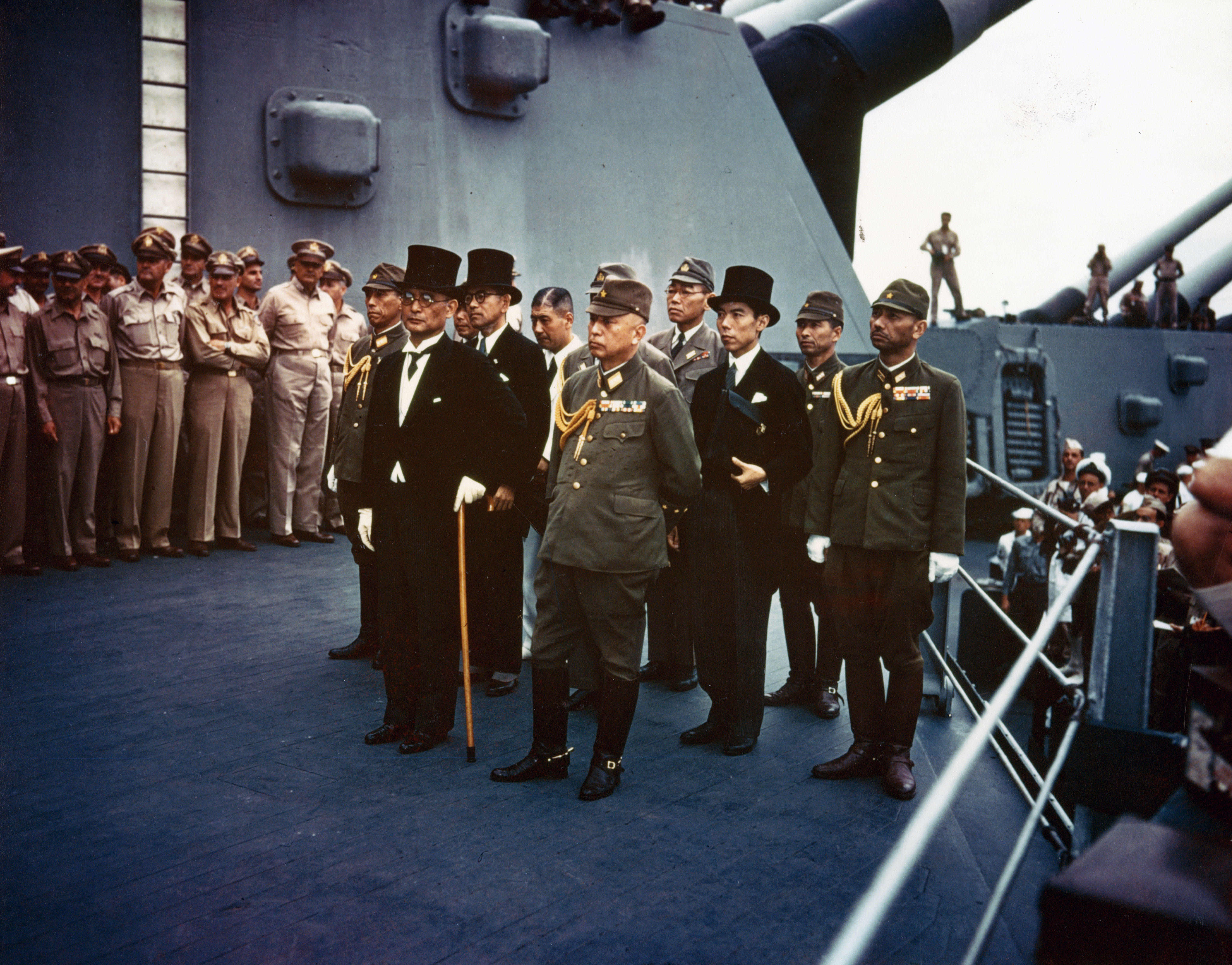
Japan Formally Surrendered on September 2, 1945
Japanese representatives signed the Instrument of Surrender aboard the battleship USS Missouri in Tokyo Bay on 2 September 1945.
The Pacific War was over.
A conflict that had begun with Japan's extraordinary series of victories ended with Allied forces occupying Japan itself.
So What Was Japan's Biggest Strategic Mistake?
Japan's fundamental problem was that it began a war whose success depended on achieving limited political goals quickly against an opponent capable of fighting a much longer war.
Pearl Harbor temporarily damaged American naval power, but it did not destroy the Pacific Fleet's carriers or the industrial system capable of replacing lost ships.
Japan gained territory, but the territory created supply problems.
Japan captured resource areas, but Allied submarines later destroyed the shipping needed to move those resources.
Japan possessed excellent pilots early in the war, but its training system could not replace them fast enough.
Japan built a defensive perimeter, but the Allies bypassed parts of it and attacked strategically important points instead.
Did Japan Lose Mainly Because the United States Had More Resources?
Resources were crucial, but they were not the whole explanation.
Industrial superiority matters only if it is converted into effective military power.
The United States also improved tactics, intelligence, logistics, amphibious warfare, submarine operations, naval aviation, radar, maintenance, and joint operations as the war continued.
Japan, meanwhile, made strategic choices that made its resource disadvantage worse.
It defended too wide an area, failed to protect merchant shipping effectively enough, lost experienced aircrew, and continued fighting after the strategic balance had become overwhelmingly unfavorable.
Did Midway Alone Decide the Pacific War?
No.
Midway was one of the most important battles of the war, but Japan still possessed formidable military power afterward.
Guadalcanal, the submarine campaign, the New Guinea fighting, the Central Pacific advance, the Marianas, the Philippines, Leyte Gulf, strategic bombing, and the blockade all contributed to Japan's defeat.
Midway changed the balance.
The rest of the war turned that change into irreversible strategic collapse.
Did the Atomic Bombs Alone End the War?
It is also too simple to say the atomic bombs alone ended the Pacific War.
The bombings of Hiroshima and Nagasaki were major shocks.
So was Soviet entry into the war.
Both occurred against the background of a Japanese military and economic position that had already deteriorated severely because of blockade, conventional bombing, shipping losses, battlefield defeats, and the threatened invasion of the Home Islands.
The surrender decision came from this combined crisis.
Frequently Asked Questions
When did the Pacific War begin?
The broader Sino-Japanese conflict had begun years earlier, but the Pacific War between Japan and the United States and other Western Allies began in December 1941 with Japanese attacks including Pearl Harbor, the Philippines, Malaya, Hong Kong, Guam, and Wake Island.
What was the turning point of the Pacific War?
Midway in June 1942 was a major strategic turning point, while the Guadalcanal campaign that followed helped move Japan firmly onto the defensive.
Why was the Battle of Midway so important?
Japan lost four fleet carriers and irreplaceable experienced aviation personnel, while American intelligence and carrier aviation demonstrated that the Japanese offensive could be stopped.
What was island hopping?
Island hopping was the Allied practice of capturing strategically useful positions while bypassing some heavily defended Japanese bases that could instead be isolated and neutralized.
How important were American submarines?
They were extremely important. U.S. submarines destroyed a major share of Japan's merchant shipping and helped cut the Home Islands off from oil and other resources from the Japanese empire.
Why did Japan use kamikaze attacks?
As conventional Japanese air power weakened, suicide attacks were used to inflict the greatest possible damage on Allied ships, especially during the Philippines and Okinawa campaigns.
What finally caused Japan to surrender?
The surrender followed the combined crisis of atomic bombings, Soviet entry into the war, blockade, conventional bombing, collapsing military power, and the prospect of invasion. Historians continue to debate the relative weight of these factors.
Conclusion
Japan did not lose the Pacific War because of one bad battle or one superior Allied weapon.
It lost because its entire wartime strategy depended on winning quickly before the United States could fully mobilize.
That did not happen.
Coral Sea checked Japanese expansion. Midway destroyed four key carriers. Guadalcanal forced Japan into an attritional struggle it could not sustain. Allied island-hopping campaigns bypassed strong positions and moved air and naval bases closer to Japan. American submarines devastated the merchant fleet and cut Japan off from the resources its empire was supposed to provide.
At the same time, American industrial production replaced losses and expanded the fleet, while Japan struggled to replace veteran pilots, ships, fuel, and trained personnel.
By 1945, kamikaze attacks could still inflict terrible damage, but they could not reverse the strategic balance. Japan was blockaded, bombed, short of fuel, increasingly isolated, and facing possible invasion.
The atomic bombings of Hiroshima and Nagasaki and the Soviet declaration of war then produced a final political and military crisis that pushed Japan toward surrender.
The central lesson of the Pacific War is that early battlefield success is not enough. A country must be able to sustain its strategy longer than its opponent can sustain theirs.
Japan won spectacular victories in 1941 and 1942—but it had entered a long industrial war that its original strategy was never designed to survive.
For more articles on the wider conflict, explore ThinkAIWorld's World War II section.
Sources
U.S. Naval History and Heritage Command — Battle of Midway
U.S. Naval History and Heritage Command — Guadalcanal Campaign
U.S. Naval History and Heritage Command — Submarine Combat Patrols Against Japan
U.S. Naval History and Heritage Command — Japan's Surrender and Aftermath
U.S. Department of State, Office of the Historian — The Atomic Bomb and the End of World War II
